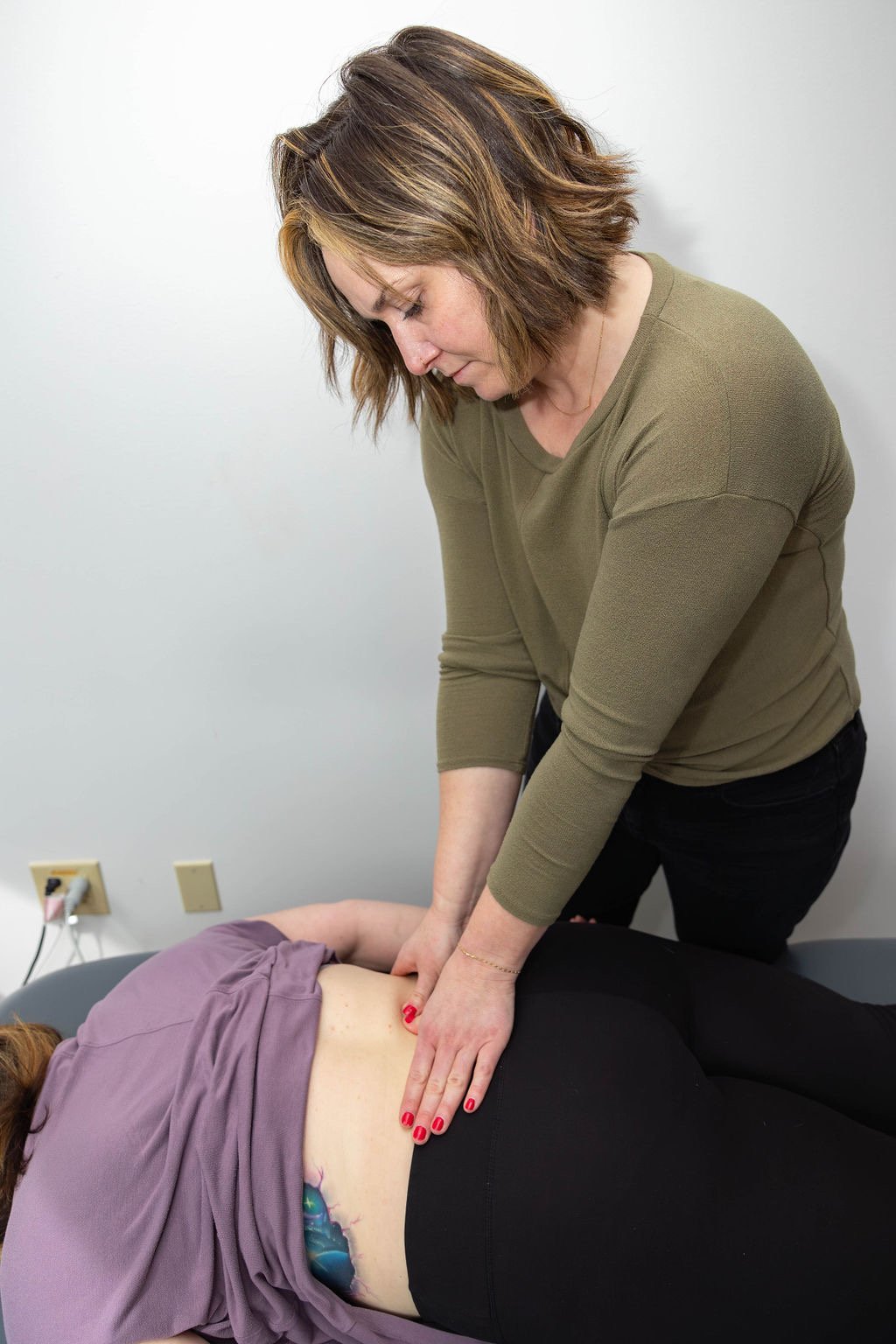
Understanding the body’s changes during perimenopause from a movement and rehab perspective

Get podcast episodes, upcoming retreats and education sent straight to your inbox.
Upcoming In-Person Course in Austin, Texas (Fall 2026)
Perimenopause: The Missing Framework for Rehab Professionals
Upcoming In-Person Course in Austin, Texas (Fall 2026)
Click here to learn more and join the waitlist
Are you looking for a clearer understanding of how the body changes during perimenopause, instead of one-size-fits-all approaches?
In Dr. Mary’s clinical practice, she regularly sees people in perimenopause who don’t realize they are in this transition. They present with new or worsening pain, limitations in movement or exercise tolerance, pain with sex, or a growing sense that their body no longer responds the way it used to, without having a framework to understand why. Because these changes are often subtle at first and not always overtly “hormonal,” perimenopause frequently goes unrecognized.
Many people are told the primary solution is hormone replacement therapy, now referred to as menopause hormone therapy (MHT). or vaginal estrogen. For some, these tools can be extremely helpful and even life-changing. For others, they may be poorly tolerated, contraindicated, or insufficient on their own. What often gets missed is that perimenopause is not only a hormonal transition, it is a whole-system transition.
From both clinical work and lived experience, it became clear that meaningful change during this stage doesn’t come from pushing harder or cycling endlessly through protocols. It comes from understanding how the body is adapting and how multiple systems interact under changing physiological conditions.
During perimenopause, fascia (connective tissue) can become stiffer, blood sugar regulation more fragile, digestion less resilient, stress responses amplified, and lymphatic flow less freely. These shifts directly affect pain, recovery, energy, and tolerance to movement. When they are not addressed, symptoms often continue even when “doing all of the right things”.
Eastern medicine and somatic-based frameworks offer valuable tools for understanding the body’s messages, helping interpret patterns related to stress, tension, digestion, energy, and regulation. Western medicine offers equally important tools, including MHT, vaginal estrogen, and medical evaluation. These approaches are not opposing, they are complementary.
A whole-body, integrative lens allows these tools to work together rather than in isolation. Nervous system regulation, somatic awareness, fascial and lymphatic mobility, blood sugar support, digestive function, and intentional strength and movement provide meaning for symptoms and support better decision-making. This reduces fear, confusion and replaces it with clarity and confidence.
Culturally, many people have been conditioned to override signals, minimize discomfort, and prioritize output over regulation. Perimenopause exposes the limits of that approach. This phase often requires a different kind of attention one centered on interpretation, pacing, and understanding rather than force.
There is no single fix. But there is a more coherent way forward, one grounded in education, integration, and an understanding of how the body communicates during midlife, so people can move through the menopause transition with greater clarity, resilience, and confidence.
Check out Dr. Marys TEDx Talk:
The Hidden Language of Perimenopause

About Dr. Mary Grimberg PT, DPT, OCS
Dr. Mary Grimberg is an orthopedic and pelvic floor physical therapist, educator, and mentor with over 14 years of clinical experience and has worked with more than 10,000 individuals across orthopedic, pelvic health, and chronic pain settings. She is board certified in orthopedics, a former orthopedic residency faculty member, a continuing education instructor for movement and health professionals, and a long-time mentor to clinicians at all stages of their careers.
Through years of clinical practice, Dr. Mary began to recognize consistent patterns emerging during midlife and perimenopause, patterns that were often overlooked, misdiagnosed or treated in isolation. Her ability to see these connections was shaped not only by clinical experience, but also by her own health journey.
For decades, Dr. Mary lived with undiagnosed complex PTSD, chronic fatigue, ADHD, endometriosis, hypermobility, and postural orthostatic tachycardia syndrome (POTS). At age 33, she survived Hodgkin’s lymphoma and underwent chemotherapy. While she believed the most difficult chapter was behind her, she soon began experiencing rapid and confusing changes: including significant weight gain, blood pressure spikes, cystic acne, debilitating menstrual symptoms, gut dysfunction, irritability, and fatigue. She was told these changes were “normal” and to wait them out, without realizing she was experiencing early-onset perimenopause.
She began studying how fascia, viscera mobility (internal organs), blood sugar regulation, lymphatic flow, digestion, nervous system function, movement, somatic awareness, and hormones interact. And how addressing these systems together drastically changes outcomes. This approach allowed her to move beyond symptom management and toward understanding how the body communicates during periods of transition.
Her training spans both Western and Eastern-informed frameworks, including advanced pelvic health education through Herman & Wallace, Women’s Health Training Associates (Australia), and the Pelvic Global Academy; orthopedic residency training through Evidence in Motion; years as a Certified Orthopedic Manual Therapist (COMT) instructor; lymphatic training through the Chikly Institute (France); and fascial training through Fascial Manipulation® based on the Stecco method (Italy). She has also pursued extensive education in somatics and trauma physiology, including training influenced by Peter Levine and Gabor Maté, to better understand how the body holds and communicates stress, adaptation, and resilience.
Known for her ability to blend humor with science, Dr. Mary brings a grounded, accessible approach to complex physiology. She does not believe Eastern and Western medicine are opposing models, but are complementary tools.
Through her clinical practice, ResilientRx in Austin, Texas, as well as her continuing education courses, retreats, and public speaking, Dr. Mary is helping redefine how perimenopause is understood and supported. Her work centers on education, pattern recognition, and integration, with the belief that lasting change begins when people understand how their body is communicating and how to respond with clarity rather than fear.

Check out the TMI Talk with Dr. Mary Podcast!
Welcome to TMI talk with Dr. Mary where we dive into non-traditional forms of health that were once labeled as taboo or dismissed as Woo.
Dr. Mary Grimberg is an orthopedic and pelvic floor physical therapist who helps people navigate perimenopause by addressing the fascia, lymphatic system, musculoskeletal system, viscera, and the nervous system.
Her whole body approach goes beyond hormone replacement therapy, showing how movement and rehab professionals can play a much bigger role in this process.
"TMI Talk with Dr. Mary" was previously known as "Sex and Wellness with Dr. Mary"